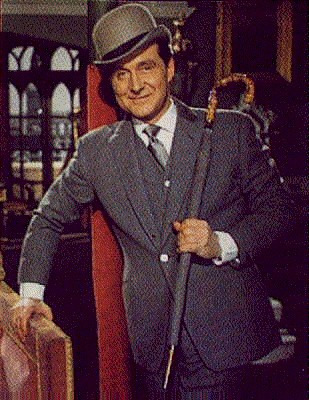
One of the main reasons I don’t particularly like mixing groups of friends is probably the same reason as most people don’t like their ex-partners exchanging notes: it’s all down to the idea that sooner or later I’ll get ‘found out’.
I’ll be the first to admit it: I can be a Janus-faced phony and it’s difficult to keep track of all the white lies I’ve told people. When social groups mix, they’ll assuredly discover the truth about me: that I’m a lazy, self-satisfied, underachieving, inconsistent, fraudulent sub-bourgeois.
Most of the lies I tell people are far from outrageous: merely half-true anecdotes to make them laugh, to psychophilanthropically stroke their egos or to hide the fact that I think they are assholes (my fear of confrontation means that I never tell anyone I dislike them). But there are other times I come out with things that are simply by way of making me look cool or to amuse myself. I even once, during a rather naff party, told a guy that I was a magician before wowing him a couple of rudimentary card tricks. I’d be an excellent confidence trickster but alas my lying is a fairly ethical one designed only for making people comfortable in my presence rather than allowing them to suffer full brunt of the intrinsic perversions and untruths and infidelities and mundanities.
As a follow-up to Thursday’s post concerning livejournal interests lists, I shall today move for further discussion on the topic of online identity. How do people want to be perceived online? Is displaying an online facia through avatars and signatures and interests lists much different to my own personal real-world bullshittery? Is it what
A good way of looking at how people want themselves to be perceived is by doing a quick search on flickr for images tagged with “me” or “self portrait”. What you get is a massive stream of digital photographs of average-looking people trying to portay themselves in a superior light or trying to conceal their various dirty truths: their vulnerability, the averageness, their wrong-headedness, the fact that they never buy a decent newspaper.


There are loads of types of self portrait on flickr and very few of them are “honest”. They all present people who are more interesting, sexy, intelligent, mysterious that the person taking the photograph. Either they are partially hiding their faces, being photographed through some other object so as to distort the final image, or they have ‘adjusted themselves’ in post-production by making themselves black-and-white or adding layers of psychedelic colour.


Maybe the reason for all of these cloaking techniques lies in the media-specific: that there is still some trepidation over the Internet; that it is the realm of perverts and paedophiles and nerds and lonely people who will wank off to your photograph. Or worse!
Or perhaps its down to the fact that people are complex cocktails of conflicting desires and paradoxical beliefs and if TV teaches us anything it’s that people should be 2D – that there should be a “Billness” of Bill or a “Lucyness” of Lucy – and that the inconsistent personality should be kept under wraps.


 The sound of the turbines is also incredible. “Do they hum?” my mum asked when I called her later. They don’t. The main sound you notice is the noise of the blades slicing though the air. Occasionally you also hear a metal squeak comparable to the cry of that massive phone-eating dinosaur on Jurassic Park 3: the sound of the heads rotating into the wind.


 A Starbucks; a Woolworths; a McDonnalds; a
  After our coffee, we looked at the city from above. I can’t remember what it was called (I was too sleepy and suffer mildly from a fear of heights) but money was paid to climb up to what was allegedly Oxford’s highest point – some sort of bell tower (pictured). It was something of a crappy tourist trap and I exclaimed that my work at the University library in Glasgow has me working and studying (for free) at higher altitudes than this but the view of the city’s spires was nonetheless quite pleasant.
 The clash of the ancient and the modern is something that occurs in many cities (Edinburgh and Glasgow spring to mind, as do Prague and Amsterdam and Paris) but often in separate ‘quarters’. In Oxford, however, the ancient and the modern clash throughout like something from an episode of Sliders in which a modern San Francisco is occupied by Wizards. In spite of Oxford’s central institutes being at the cutting edge (The Bodders for instance is one of the best libraries in the country and the world), bicycles assuredly outnumber cars and the classical aestheic is everywhere.
 It sounds weird, I know. But in my defense, William Wordsworth said something similar about nature; that he sometimes loved the Lake District so much that he had the desire to eat vast fistfulls of grass and soil so that nature could exist inside as well as out. I wonder if Wordsworth had been a creature of the suburbs instead of the countryside, he would have felt as passionately about concrete, space raiders and dog muck.
 Today I put on a ‘best of’ CD of


 Now, while


 In other news, I watched Jim Jarmusch’s fairly super Ghost Dog this morning. The soundtrack by RZA is superb and there is some wonderfully moving and funny stuff in it. I hate it when webloggers pretend to be film critics and I vow not to do it too often, but sometimes you enjoy a film so much, you just want to talk about it and Ghost Dog for me was one of those.
 No it can’t. And doesn’t. Family Guy might be able to ‘go anywhere’ with its use of non-sequitur but American Dad! doesn’t do any of that stuff and exists in a highly rigid format which can’t change very much. The characters occupy a unique Post-9/11 world of paranoia and racism and overtly conservative values. It can’t and doesn’t go ‘anywhere’ and that’s precisely why it’s great. It does what it does very well and doesn’t worry about ‘going anywhere’ like some homogenised general ‘TV show’*. Ya gink.
  On a similar note, I remember reading a Guardian interview with Richard Kelly about his creating Donnie Darko. He said that the ‘philosophy of time travel’ story didn’t come about until the last minute and that his writing the book of the same name (or rather the manuscript since it was never actually published and Wikipedia actually
 But in this quagmire of procrastination, I’ve found myself being quite productive in other areas. I fired off an email to