The Netflix

Enjoying some time in bed with the sniffles, I decide to sign up to Netflix — or “Net Flicks” as I naively thought it was called until today. When did I get so old? Why can’t we live forever?

A universally popular TV-streaming service, I think, probably beats staring at the formation of cracks in our ceiling that some say looks like Sir Roger Moore and others say looks like a knackered bedroom ceiling.

Besides, I must admit to harboring a degree of curiosity about this thing everyone’s talking about. First time for everything, I suppose.

I’ve resisted Netflix for some time, in part because it’s one of the things contributing to the BBC’s redundancy and I hate to think of Messrs Attenburgh, Castle and Blobby not having anything to do anymore.

But it’s a tad hypocritical to worry so much about the Beeb when I don’t actually give them any money, isn’t it? The TV license, you may not know, can be avoided when you exploit the simple loophole of slinging the telly out of the window. Just make sure it’s not going to fall through the roof of a detector van before you push it off the ledge.

Anyway, what strikes me first and foremost about Netflix is its uncannny resemblance to the in-flight entertainment systems you get on airplanes.

The main comparison lies in how, despite there being a bewildering range of programming on offer, it never has quite what you want — presumably because the aim of whomever curates programming for each of these cloud-based services is to mollify a bored, anxious, probably grounded, international audience.

The effect is that you sit in your own stench, contemplating the likelihood of a pending fiery death, wile fingering a just-about-responsive interface composed of colourful, twerp-proof Whytech buttons. Yes, it feels very much like something that should be stuck in the back of another passenger’s reclined, dandruffy head.

You ask it to show you The X Files which can’t be done but, God bless it for trying, you can have any one of seventeen other things with David Duchovney instead.

You try to browse the comedy section but you end up viewing the first 13 seconds of something called Mindhunter thanks to a slow-loading banner ad.

Beyond a huge number of expensive-looking superhero- and monarchy-based exclusives is what can only be described as “an abyss of tat.” Firmly in this category is an awful lot of old BBC content. Obviously Netflix will have paid the BBC some money to show these programmes but I wonder if the The Big British Castle also receive royalties after a certain number of viewings? I don’t know for sure, but this is what happens with books — you get a certain amount up front and then a percentage after selling, say, 10,000 copies. Or so my publishers assure me.

This gives me an idea. Could we not rescue the BBC from its funding crisis by leaving old episodes of Blackadder playing from beginning to end when we all go out to work? You’d leave in the morning with Brian Blessed on the screen and come home in the evening to the fate of Speckled Jim. Meanwhile you’ve made 20p for the BBC. If everyone did this, Aunty would be rolling in pence.

Better still, we should choose to play old episodes of Bottom, just so the campaign can be called “Bottoming”. That is, #Bottoming.

Part way through an episode of an alienating, joyless cash-in called Star Trek: Discovery, I find myself wondering which is the button that will tell me the time remaining until our destination.

Might go back to staring at those ceiling cracks.

The Letter

Friday night and my arm is worn out. Not for the reason you’re thinking of (honestly, madam, where do you get it from?) but because I’ve been writing a letter.

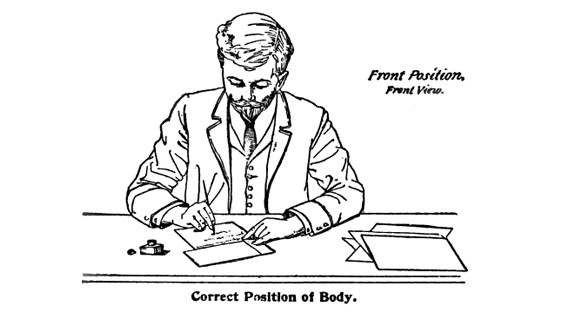
Yes, a proper, long-form letter with an old-fashioned pen and paper. Two sides of A4 if you must know (and you must).

A friend wants to keep in touch by writing letters and who am I to deny him this archaic pleasure? If it weren’t for the distraction, he’d only roam the halls of his family seat, bellowing in his pantaloons and wistfully playing the lute.

Besides, letter-writing turns out to be good clean fun and I certainly hope to continue the practice for a while. I mean, it took me so long to find a pen, I’m invested now.

The pen turned out to be hiding in some sort of “case” along with a few coloured pencils, a half-moon-shaped piece of plastic, and one of those devices for stabbing other children in the back of the hand. It’s amazing to think that schools once asked us to maintain such kits of bizarre and sadistic gadgetry but there must have been some reason for it all.

Acceptable writing paper took time to excavate too. I genuinely considered tearing up a cereal packet into squares. Alas, we don’t have an empty one at the moment, and having to eat six bowls of Sugar Puffs in order to write a letter quickly put paid to the idea. Besides, my friend had already set a high standard by writing to me on such nice-quality paper with his home address embossed along the top that it did not seem adequate to reply using a jigsaw puzzle of the Honey Monster’s face.

I eventually found — between some fossilized layers of gas bill — a single sheet of A4 printer paper, probably half-inched from some office job of yore. Come to think of it, what do people steal from work these days to make it worth going in? Bandwidth?

When it finally came to writing the letter, I’ve not had so much physical activity in years. Up and down the pen-strokes go, across and around, dotting and looping. You must avoid the temptation to put down so many exclamation marks, just because the motions inspired by their shape is so appealing. It’s worth reserving such punctuation for phrases like “send help!” or “trapped in a drain!” if you want them to have conviction.

And then you have to tear it all up and start again because you’ve drifted off and written “cockholes” instead of “dear friend” or because you’ve crossed out too many misfires and the pen has leaked and you’ve knocked your glass of water over it.

But just six hours and two small fires later, and you have a beautiful, hand-written letter replete with meaning and personal confidence. It’s a shame the diagonal slant promoted by sitting at a table for once makes everything radiate from the top left-hand corner like an upside-down version of the explosive symbol.

It takes you back, writing a letter. You remember all manner of things — checking the dictionary before committing a word to print; putting the address in the “correct” corner; taking letters dictated by parents and teachers, mischievously including the interjections of passing strangers and pets.

Remember all of the rules like the requisite number of blank lines between date and address, and ending with “Yours Faithfully” if you began with “Dear Sir”? Today, as you know, it’s perfectly acceptable to start an email to a parent or employer with “Alright, Cunt?!?!”

And now, as I seal my masterpiece into the envelope — what better way to end a respectful epistle than with the application of saliva? — my arm is like that of the false Rod Hull. I’ve always had skinny, string-like arms but after writing the letter I fear my limbs will now only move again with the application of Kermit the Frog-style rods.

Off I go now to the Post Box. Hey, remember when we had to put one of those sticky “Queen’s head” things onto the envelope before posting it? Crazy days!

Boring Podcast 2: Umbrella

“It’s a portable roof. The logical extension is a portable roof, walls and floor. And then you’ve got people going around in hamster balls.”

Landis and I are fond of things that most people would describe as boring. We’ve talked into the night about light switches, pencil sharpeners, train stations, telephone boxes, and typefaces. We find them interesting. So what?

As an experiment, we’ve recorded some of these chats as if they were podcasts. The challenge for us is to talk about an everyday object for one hour without pause or deviation. The challenge for you, madam, is to listen to it without falling asleep.

Our first recording was about notebooks.

This time, we discuss the humble umbrella. If you want to, you can listen to us here.

Notes:

The song I sing (like a prat) at the beginning is called “Umbrella Man”. We didn’t know the origins at the time but it’s apparently a Flanagan and Allen song.

Roald Dahl’s story “Umbrella Man,” can be read in More Tales of the Unexpected or online here.

Landis mentions “The Sopping Thursday” by Edward Gorey. You can see some pics from this book here.

The Sherlock Holmes passage I struggle to quote is not from the canon at all, but from the marginal notes of Leslie S. Klinger’s New Annotated Sherlock Holmes. Klinger quotes from a book called What Jane Austen Ate and Charles Dickens Knew by Daniel Pool: “No gentleman was ever without [a cane] or its doppelganger, the tightly furled umbrella.”

The Muji umbrella I own and believe to be the best umbrella ever is this one.

The Melrose Umbrella Company, the bar mentioned by Landis, is on Melrose Avenue, Los Angeles.

Here is the dictionary truth of the unlikely word “bumbershoot”.

At the time of recording, we were unaware of the pending publication of Brolliology: A History of the Umbrella in Life and Literature by Marion Rankine, but it looks completely fab.

Anyway. “Enjoy”.

“[A bad umbrella] is like a clattered tangle of coat hangers. Or a panicked crow.”

Published
Categorised as Podcast

Credits

This isn’t everything, but it’s everything I care to mention.

Pure Riddy 4

pure riddy GICFAnother fine instalment of Meadhbh Boyd’s teen diary-reading nights. This time we did it as part of the main Glasgow comedy festival over two nights. I was there doing my fauxward thing. Solid walls of pure lady laughter. Ace.
Read more.

Humorists: Their Four Uses

robposter-finalversionIn October 2015, I took a performancy talk to Glasgow’s Project Cafe, as part of a social enterprise called MyBookcase. I talked a little about humour writing, read from the work of my favourite dead humorists and from my own book, A Loose Egg. I’d like to do a bit more of this sort of thing. Read more.

Pure Riddy

southside-fringe-festival-logoOn May 21st 2015, I dusted off my childhood and teenage diaries to read at Meadhbh Boyd‘s ace diary-reading night as part of Glasgow’s SouthSide Fringe festival. Excellent, hilarious and shocking readings, mostly from women. Not laughed so much in ages. Some of the old OMG! gang were there too and much merriment was had.

The Salon

On 10th October 2011, I took part in The Salon for Untitled Projects at the Traverse Theatre, Edinburgh. The theme for the evening was ‘The Future’ and involved my dressing up in Nineteenth-Century garb and performing my piece, The Escapological Eutopia: Five Dodgy Prophecies. It was a truly incredible evening.

The Sulking Ape and Other Stories

In August 2011, we read sections from New Escapologist at The Voodoo Rooms in Edinburgh. I served as MC and read from my own elegant piece, Meditation on a Toilet. We were accompanied by live Erik Satie music from Wireless Mystery Theatre. Read more.

The Wringham & Godsil Podcast. Live!

We ad-libbed our way through four live versions of our podcast at Peter Buckley Hill’s Free Fringe 2011. We talked about human centipedes, celebrity handshakes, unexploded war bombs and much more. Our entry in the programme read: “Tired of listening to podcasts with only your ears? At last, you can see them with your eyes too!” Read more.

Robert Wringham and the Chrono-Synclastic Infundibulum

As if at the whim of a chrono-synclastic infundibulum, I appeared at Glasgow’s Kibble Palace between 12:00 and 13:00 every Wednesday in March 2011.

Read more.

DiScOmBoBuLaTe

Compared by Ian Macpherson, DiScOmBoBuLaTe is a comedic/literary cabaret night in Glasgow that has now seen performances from Arnold Brown, Magi Gibson, Alasdair Gray, Aidan Moffat, Alan Bissett, Iain Heggie, Anneliese Mackintosh, Simon Munnery, Liz Lochead and many other geniuses. With Ian, Magi and Alan, I was a founder member and regular performer.

The Great Escape

Under the banners of our publications, New Escapologist and The Idler, Tom Hodgkinson and I confronted the Anarchists of Glasgow with our ideas on the good life. The night was hosted at the Glasgow Social Centre and concluded with a ukulele sing-along. There’s a promotional micro-site here, a short description of the night here, and an abridged transcript of the main event here.

OMG Glasgow

Fergus Mitchell ran a brilliant diary-reading night at Cafe Offshore in Glasgow. I was probably its most regular performer. It was great fun until its inevitable peak-oil-style demise. Here are some thoughts I had about the night and Neil Scott’s review.

Confabulation / It’s all Talk

I did two spots at Matt Goldberg‘s Confabulation in Montreal. At one, I painted a portrait of my hometown of Dudley. At another, I told the cautionary tale of the bank manager.

Through this, I was a guest on the first show of the surely now-famous It’s all talk with Asaf Gerchak in Montreal. I appeared alongside Asaf himself, Matt Goldberg, DeAnne Smith and burlesque dancer Lady Josephine.

Come Away In

At an event in a house, called ‘Come Away In’, I was asked to do stand-up comedy in the front garden. It didn’t really work and I felt unpleasantly exposed. My second set in the back garden was much better. I decided to perform atop of a step ladder in the middle of the lawn. I introduced myself as a comedian, climbed the ladder and read (for over an hour) from a found book of ‘pub jokes’, dissembling the racism and sexism as I went along. It rained but I carried on. I’d like to do this again somewhere, but provide buckets of fruit for people to throw. Read more.

Club Swallows and Amazons

I redundantly served as MC one night for Club Swallows and Amazons burlesque club. I was fine to begin with, but ended up tripping a guitarist’s patch cable. Nobody seemed to care, but I felt like a div and my ungainliness has troubled me ever since.
Juvenilia

I have what I consider two debut performances. My first shot at stand-up as an adult was at The Stand’s ‘Red Raw’ night for beginners in about 2004. I stole out of my flat on the pretense of buying my flatmate a Christmas present, because I couldn’t bear seeing a familiar face in the audience. My performance was okay, if forgettable, but a man at the back of the room kept calling out “Mine’s a double”. A pretty cryptic heckle, and because of my cheating tendency to play arts centres instead of clubs today, it remains the only heckle I’ve ever had.

Before that, my first ever stand-up performance was at the Birmingham Hippodrome after winning a competition (with three other boys) through my school. My material about McDonald’s restaurants was so brilliant that the comedian in charge of the workshop accused me of plagiarism, though he couldn’t specify the source. (I hadn’t stolen it. I was just good at wrapping my pre-prepared material around his thematic exercises, thus providing the illusion of spontaneity – which was a skill too brilliant for a fourteen-year old, apparently). Through this, I eventually had the honour of briefly meeting Josie Lawrence from Whose Line is it Anyway?. The event was sponsored by a carbonated beverage called Fanta and we all had to wear T-Shirts depicting its logo. I wore my leather bikers’ jacket over the shirt because I am a rebel. Our deputy headmaster, Mr. Ashwood, said he saw me on the news, in my leather jacket, shouting the words “Fillet o’ Fish” into an eight-year-old’s face.

Wash Your Neck

Every now and then, something from my working-class childhood floats up in memory to give me a shudder. The Nit Nurse, for example, or a scene glimpsed through a Blackpool window in 1993.

And then there’s Athlete’s Foot. Whatever happened to it? The 1980s was a golden age for Athlete’s Foot, a festive dusting of Tinaderm on the rim of every toilet bowl. Today? It is gone. I’m reminded of Richard Dawkins saying that “to allow a species to fall into extinction is to will the destruction of a masterpiece.”

Admittedly, Dickie may not have been thinking of Athlete’s Foot when he said that, if indeed he ever said it at all (which he didn’t), but it would be disingenuous for a biologist of his stature to so adore, say, the mountain gorilla and not our old friend tinea pedis, as I’d call it in said working class childhood.

“My tinea pedis, mater,” I’d exclaim in a broad Dudley accent, aggressively rubbing my de-socked feet against the rough edges of the Dudley skirting boards, “Ubi dolor, ibi digitus,” to which mother would inevitably respond “I’ll give you ubi dolor, ibi digitus ’round the head in a minute.”

But Athlete’s Foot is not what I sat down to tell you about today, loyal reader. No! That particular blast of nostalgia was merely the warm-up. What I’d meant to raise today is the strange case of the washed neck.

What was the grownups’ obsession in our childhoods with washing our necks? “Go to the bathroom,” they’d say, “and wash your neck.” I was forever being sent to the bathroom to wash my neck. The hours lost to it are probably why I never took the piano beyond Three Blind Mice.

Why the neck? Why not a traditionally smelly area like the armpit or, in my strange case, the arnus? Why not the hands, forever touching grubby surfaces and coving orifices as they do? Why not the fungus-addled feet? Or why not, simply, one’s whole self?

It was a long time ago, I suppose. Perhaps in those days they thought a clean neck kept draclias away (draclias being what we called Vampires in the British Midlands — not to be confused with Dracula who was simply a draclia who happened to be in the public eye). But if that was the case, why not pop a little clove oil behind each earlobe while you’re at it? And surely a clean neck could only make you more tempting to creatures of the night. Perhaps, then, it was a courtesy to the draclias. We knew our place.

Perhaps neck-washing was a sacred ritual to the British working classes and its significance was never explained to me. The human neck, if I remember my anatomy lessons correctly, is what keeps the human body attached to the human head (or your head attached to your body if you’re a pessimist, or your head attached to someone else’s body if you’re a surrealist, etc.) but beyond that I’m not sure of the significance of frequent localized neck cleansing.

Perhaps “wash your neck” was an aspirational expression, borrowed from a more arisocratic class who’d be understandably proud of a highly-buffed neck — a comforting, almost satirical superstition developed through their residual fear of the chopping block.

On the other hand, maybe it was a euphemism I failed to pick up on. Did “wash your neck” somehow mean “have a shit” or “tap one out”? Or! Perhaps it was a secret code between parents — a bit of predetermined patoir for “let’s get rid of the kid so we can get it on (i.e. neck)” perhaps?

Wait. I think I’ve got it. If we recall that “neck” sometimes meant “a brazen attitude” as in “a brass neck” or “the neck of hell,” perhaps “wash your neck” simply meant “reign it in, lad,” in a similar way to how “wash your mouth out with soap and water” was a response to swearing. If this is the case, then I spent far too much time in the bathroom taking the request literally. My poor parents. That poor, bald flannel.

Shits All Over a Nectarine

I like peaches,
they’re my favourite fruit.
But you always have to eat them
in your least-favourite suit.

Poetry! Maybe I’ll start each of my diary entries in this way from now on. Tune in next week to see if I stay true to this dream, idly cooked though it was in the fires of peach-fuelled ambition.

Yes, I’ve been eating peaches. I am drunk on their nectar. I am surfing the body electrolyte. I’m peach-stoned. I’ve been juicin’. I’m baked in a pie. Any more? I’m canned. No, that one’s not specific enough. Delete.

Seriously though. [applies stern face]. Peaches really are my favourite fruit. Maybe they’re my favourite thing full-stop. How can something like a peach grow on a tree of all things? When I eat a peach I find myself thinking, “how do they make these?” Such fine craftsmanship.

From velveteen shell,
to lesioned pit,
’tis the dandy prune,
who thinks he’s it.

There I go again. When I took to this page I never thought I’d be moved to poetry. I just wanted to write about peaches and my enduring love for them. But that’s peaches for you. They inspire verse. Truly, they are the musical fruit.

Note to self: continue writing poetry, learn piano, co-opt moniker “the musical fruit”. Great posters.

Reader, would you believe me were I to say I could each peaches all day long, surfing eternal on the syrupy rush? It seems unlikely, I know, but they are the drug choice for we polymaths. And for wee polymaths, I imagine, too.

I’d step over any number of dying relatives to reach a peach. My curse is peach addiction; my blessing, a good stride.

To a peach,
I would reach
‘cross mum and dad
each.

Yes,
a peach
I beseech,
with gangly leg-reach.

Sometimes, I have a mind to combine my love of peaches with my other true love but you’d be surprised how much scorn is poured on fruit eaters in the royal box. It’s because of the slurping, I suppose. But I say it can’t be helped and if you’re offended by the sight of a syrupy tuxedo, keep your opera glasses pointed firmly at the stage. Trichome? Tricho-you, buddy.

In Scotland we praise
the spud, neep, and bunnet,
But when I go shopping,
I just pick up a punnet.

A bit far-fetch that one, perhaps, but I don’t see you breaking out into spontaneous rhyme based on berries. Besides, when you think “punnet”, where else are you supposed to go? Oh, wait.

As every fool knows,
it resides at the summit
of the fruit hierarchy,
so let’s have a punnet.

Better.

Peaches are the only fruit to lead to such creativity. Did the Stranglers themselves not sing about the pleasure of “walking on the beaches, looking at the peaches”? Why just look at the peaches though, chaps? Sink your teeth in.

You can have a lot of fun with a peach. If you know someone who’s never eaten one, poor soul, tell them that the peach must be peeled. Better still, tell them it must be shaved.

I was always saddened by Merill Nisker’s tendency to “Fuck the Pain Away.” Why find solace in being saucy, Miss Nisker, when you could so easily be juicy? The clue was in front of you all the time.

Perhaps I could be the official product ambassador for peaches. “The Peach!” I would say to everyone who’d listen. “Shits all over a nectarine. Plums? Fuck off.”

It’s not all fun and games though. One word: stalks. You can rarely extract the stalk before eating the peach as you would with, say, an apple. And you can’t eat the stalk like you might with a strawberry. Eating a peach stalk is like chewing an antique earplug. Not pleasant.

And why so velvety? Is it because they’re Sylvanian Families eggs? I’d be surprised if they weren’t, and so would you, dear reader. Typically, we eat peaches when they’re fresh and therefore unfertilized so all we experience is the sweet, orange albumen. But dive in a day too late and you’ll find… parts.

Forget it. I’ve gone right off them.

Peaches Peaches,
Never eat,
They truly are
the devil’s meat.

Luke

I found myself thinking today about Luke.

You remember Luke. He was the chap who, when I was on work experience at the council, occupied a corner office designed to segregate him from the others lest he distract them with his exquisite beauty.

He was the one who taught me how to skive by playing Minesweeper with some invoices beside me in case someone came in.

Anyway, for the first few days of my work experience week, I thought Luke was it. We had a connection, I thought. He’d give me knowing winks. He once had me in hysterics when he breezed through the main office, singing “have a banana.”

For all this admiration, I knew we were very, very different. He was a man’s man. I was a boy. And not even a boy’s one.

He once said “Hello Fruity,” to one of the receptionists and she seemed genuinely charmed by it. I’d never be able to say “Hello Fruity.”

If I ever said “Hello Fruity,” my name would be taken down. Rightly.

It was 1998 and one of the things Luke and I both loved was South Park. South Park was huge and I had a squishy plastic Kenny on my key chain. Luke was thrilled when he saw it. He unfastened his suit jacket and showed me his Mr Garrison necktie. It was brilliant.

During my work experience, the long-awaited second series had just started to air. I watched it at home one night and came dashing into work, excited to see Luke. “Did you see it?” I asked him, panting.

“Yeah!” he said with shared enthusiasm, “the baby went up in her head! Ew!”

And we laughed.

But something was wrong. The baby hadn’t “gone up in her head,” it was a conjoined twin. That was the whole point. Conjoined Twin Myslexia. It was practically a catch phrase, repeated and repeated throughout the whole episode. I can still remember it, eighteen years later. Conjoined Twin Myslexia!

He hadn’t understood it. I’d met my first grown-up idiot.

I mean, I already knew my parents were cultural philistines but all that meant was they weren’t interested in South Park so they didn’t watch it. This was “stupid” but I’m certain they’d have understood what they were watching had they done so. There was a difference. Luke had sat on a sofa beneath three homely wall-mounted flying ducks, watching his favourite television programme, not understanding it. But he’d laughed.

So that’s why he had the corner office.

On my last day, I went with Luke on a routine inspection of council houses. In one, the tenant had blu-tacked some pages from a pornographic magazine onto the walls.

“Oy-oy,” said Luke, and made an obnoxious vaginal suction-sound between his tongue and lower lip.

I occasionally make that noise when I think nobody’s there to hear it.

Except My Genius

The customs officers at JFK do not take kindly to flouncers, flaneurs or fops.

If you ask me, they’ve had it in for us since Wilde’s “nothing to declare” jibe, or “Geniusgate” as they call it now.

Back 2009, I was rather full of myself. I’d been recognised a couple of times as a comedian, I was flying around in Europe and North America simply for fun, and I was sleeping with people with full sets of teeth for the first time in my life. I thought I was it.

None of this held any weight at JFK Security.

“Hello!” I said.

I’d flown in from Montreal where I’d been romancing the lady who’d eventually become my wife and was now off to New York to romance someone else entirely. It was, as they say, the business.

“What is your business in New York City?” said the customs official.

“Well,” I said. “I suppose you could say I’m here for pleasure.”

“Pleasure?” she growled.

“Yes,” I said, wiggling my eyebrows left, right and impossibly centre.

“What is your profession please?” she said.

“A bit of this,” I said, “a bit of that.”

“Some kind of comedian, sir?”

“Yes!” I said, delighted, “though between you and me I’d be more happily placed in the feuilletons of a decent broadsheet than the stage.”

She eyeballed me over the top of her glasses in exactly the way as a careers adviser would.

“What is your address in New York City?”

“I don’t have an address in New York City,” I said, fingering the unicorn on the passport, “I live in Great Britain.”

“Yes,” she said, “I can see that. But what at what address will you be residing while in New York City.”

“Gosh,” I said, “I have no idea. I’m just meeting my friend at Grand Central in about forty minutes from now. At an Oyster Bar apparently. You don’t happen to know it do you?”

The officer stood up. She was short but impressively wide.

I noticed for the first time that we were both wearing blue gloves, mine alpaca and hers rubber, but almost certainly for different reasons. Well, not entirely different reasons and we’d both probably end up thinking of England. But it all comes down to motivation.

“Sir,” she said, “You must have an address if you’re to enter New York City.”

Today, of course, I’m a far wiser traveller. I always know the address of where I’m staying and, if for some reason I don’t, I could make one up. I could simply have said “I’m staying at the Waldorf Astoria” and slipped unhindered through the barriers like a swamp adder through the bedroom duct of an unwanted heir.

“Well,” I said, “I don’t have the exact address with me. I’m staying in the Bronx, I think. Is Chinatown in the Bronx?”

“That’s no good. What if we need to contact you?” she said.

“What if who needs to contact me?” I asked.

“The TSA,” she said.

“Who’s that?” I said.

“That’s us,” she said tapping the insignia on her breast pocket, “the Transportation and Security Administration.”

“Frankly,” I said in all innocence, “that eventuality had never occurred to me.”

Ah yes. I’d got her on the ropes alright. This is probably why she huffily prodded some computer keys and said, “I’m putting a note on your record. Make sure you have an address next time.”

I suspect this was bluff as no customs officer in the meantime has referred to this “note” on my “record”. But it’s quite exciting to think that the TSA care so much about staying in touch.

I unhooked Enrique, my umbrella, from her Plexiglas sneeze guard-thing and settled back into the mood for oysters.

The Niceness of Notebooks

Friend Landis and I got talking about notebooks and, as one thing lead to another, we decided to podcast it.

Listen now to The Niceness of Notebooks.

Trigger Warning! This is, quite literally, an hour of recorded chat about notebooks and nothing else. It may prove permanently soporific to those who do not share this form of object fetishism. We are not responsible for instances of eternal slumber.

Here is Sean Flannagan’s notebook review discussed in the podcast.

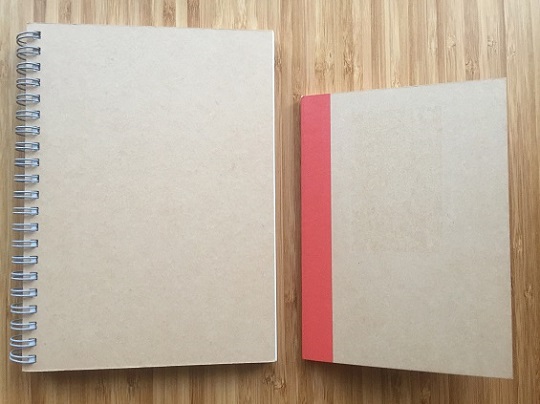
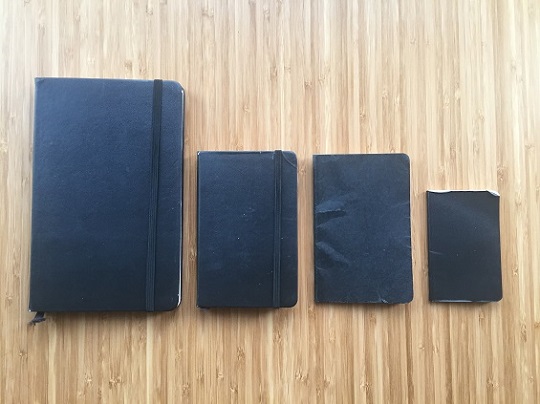
Here’s what Landis’ Moleskine notebooks look like:

And here’s what my Muji notebooks look like:

Enjoy!

Published
Categorised as Podcast

German Press

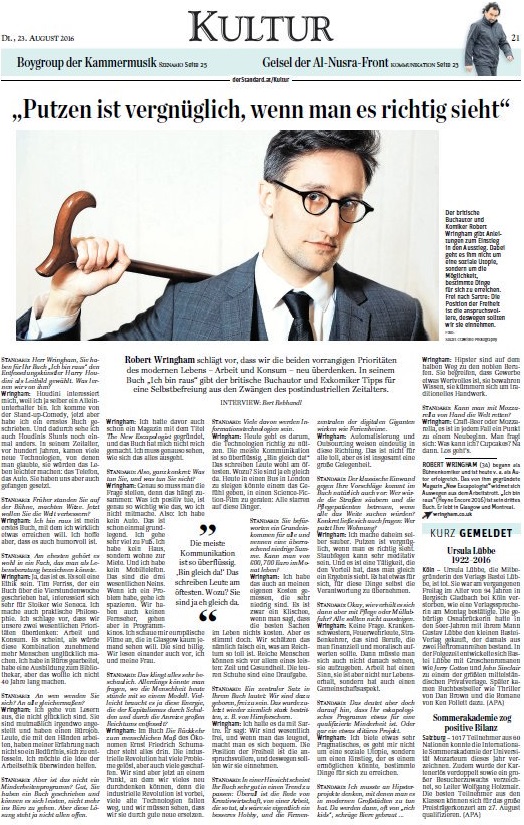
wringham kulture

Ich Bin Raus, the German language edition of Escape Everything! has been doing well in Germany, Austria and Switzerland.

We made it into the top 100 of the Amazon.de book chart and ordered a second print run after just a month.

Here’s a collection of press cuttings, largely interviews and reviews.

Berliner Zeitung
Focus
FÜR SIE spezial (PDF)
PT Magazine
Lausitzer Rundschau
Frei Presse
Süddeutsche Zeitung
Dariadaria
Kontext, Austrian public Radio ORF OE1
Radio SRF 2 Kultur, Kultur kompakt, 29.08.2016, 16.50 Uhr
Aspekte (Science magazine show for ZDF television)
Kultur-online
Behmanns Blog
Profile in Die Welt
Handelsblatt online
VIPly
Huffington Post
Redaktionsnetzwerk Deutschland
Das Magazin

Also, my page on German Wikipedia is bloody massive.

In case you’re wondering, I’m not yet rich.

Escape Everything!

My latest book is called Escape Everything!

It’s a practical guide to getting out of things. Essential reading for wage slaves and idlers alike.

Published by Unbound. Distributed by Penguin Random House. Available in proper bookshops and even online.

eecover

Blurby:

We are all trapped by modern life. Trapped! Trapped by work, consumerism, stress, debt, isolationism and general unhappiness.

We will each spend an average of 87,000 hours at work before we die. We will spend another 5,000 hours getting to and from work and countless more preparing for work. Worrying about work. Recovering from work.

The majority of us hate our jobs. But without work, we can’t buy all the things we’ve been told we should want and need, so around we go…

Through the pages of New Escapologist magazine, Robert Wringham has been studiously examining the traps of modern life, questioning where our commitment to them stems from and why we are so unable to break free.

Taking inspiration from the great Escapologist Harry Houdini – who escaped from jail cells, straitjackets, and even the innards of a dead whale – Wringham applies Houdini’s feats as a metaphor for real life, proposing the principle of Escapology as a way to cut loose our shackles.

Become a modern-day Escapologist and freedom and happiness might be possible after all.

Genitalia

Almost a year ago, a Toronto Star journalist got in touch because (a) I’d been shortlisted for the Leacock prize and (b) she wanted to know my thoughts on four of the five finalists being male.

I can’t say I approved of the resulting article, but at least I got away with the best quotation in it: a reasonable feminist rallying cry and a knob joke.

But a quote is still just a quote. For posterity, here’s the full and blinding magnificence of what I submitted:

I love the Leacock Medal and the books it promotes. I collect those books, read them, adore them. I kiss them right on the foil-embossed medal when nobody’s looking. Part of the reason I submitted A Loose Egg was an ongoing love affair with the work of Eric Nicol, a dazzlingly witty Leacock veteran.

Gender equality is something I could talk about until the cows (or bulls!) come home. But I’ll try and keep it brief for everyone’s sake.

I think there’s a bias favouring men at large in society and male authors in publishing. Men are the default beneficiaries of so much because of centuries of this bias. It’s pervasive and systemic: men are more likely to be encouraged to write in the first place, more likely to be rewarded for talking about themselves and voicing their opinions, more likely to get published (not that I’ve benefited from that myself) and to dominate the book charts.

The bias has manifested itself in literature as the male voice being accepted as the normal or universal perspective, positioning the feminine as some kind of deviation from that norm or as a “perfectly valid alternative”.

As a shortlisted writer, I don’t know much about the Leacock selection process. I’m not an insider. I just put forward my self-published book and hoped for the best. But I very much doubt the committee want to deliberately exclude anyone. The selection bias in publishing and in society takes place long before the books reach the Leacockers.

Just because there’s no one person or organisation to finger though, doesn’t mean the system at large is beyond investigation.

Something any one person could do to help fight the male bias is to read more women writers, to help eliminate the idea that female authorship is any kind of “special interest” field and to help stimulate market demand for female writers.

The gender bias brings up some good absurdities though. Like how could external genitalia possibly make you a better humorist? Mine have got a few good laughs admittedly but I can hardly take credit for that.

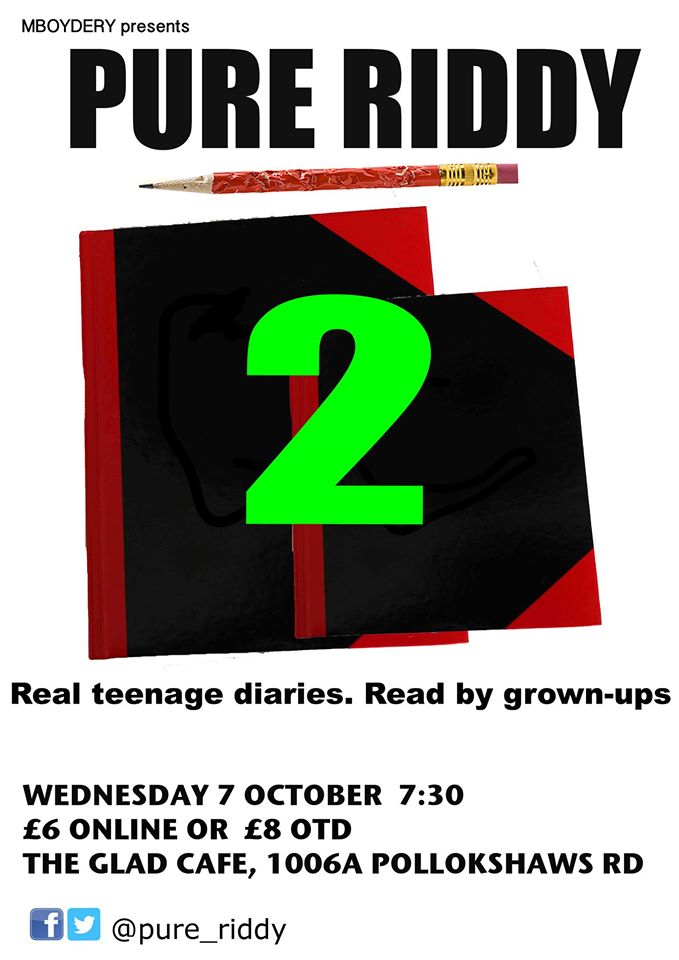
Pure Riddy 2: October 7th 2015

Doing five minutes of GOLD (alongside 12 other readers with their own golden fives) at Meadhbh Boyd’s lovely, supportive, hilarious gig. Come!

Glad Cafe, Glasgow. October 7th at 19:30.

pure_riddy_2

Event! October 11th, 6pm.

robert-wringham-humorists-poster

Yea, I’m doing a night of readings for MyBookcase at the Project Cafe in Glasgow. It’s going to be fun. You’ll see if it isn’t.

I’ll read from A Loose Egg but also from my favourite dead humorists including Jerome K. Jerome, Dorothy Parker, and Douglas Adams.

What gets read after a certain point will be opened up to democratic referendum: the hostages get a say in the demands.

It’s free entry, madam, but you’ll want a ticket. Just like in a bakery.

Blurby:

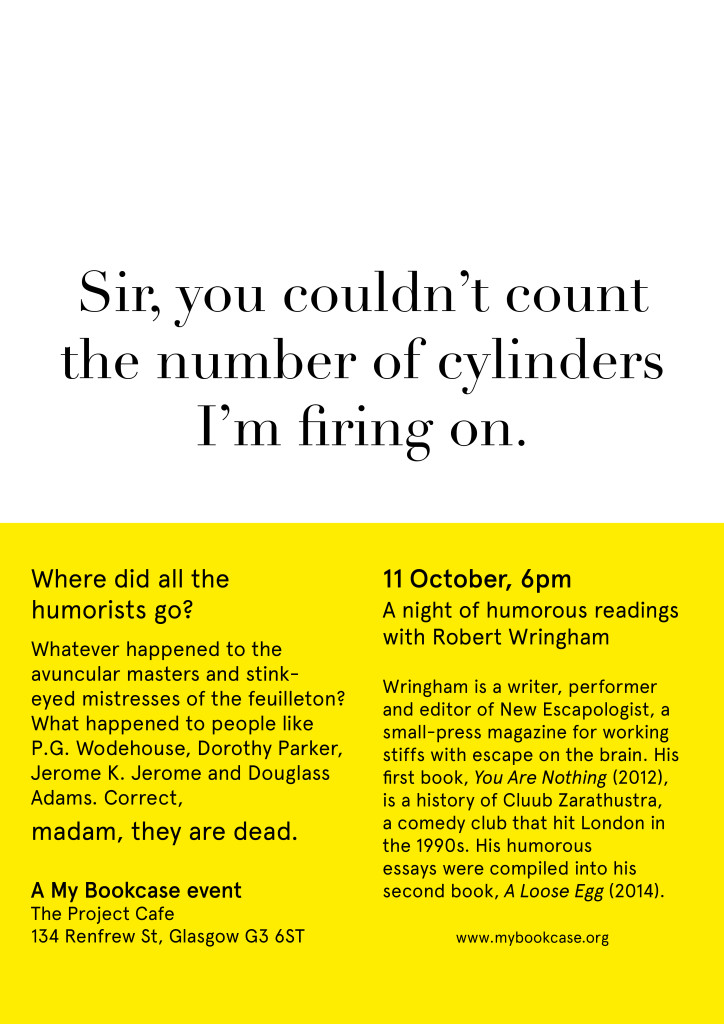
Where did all the humorists go? Whatever happened to the avuncular masters and stink-eyed mistresses of the feuilleton? What happened to people like P.G. Wodehouse, Dorothy Parker, Jerome K. Jerome and Douglas Adams. Correct, madam, they are dead.

And as if rigor mortis weren’t enough of a drag, these fine people’s jobs have been usurped by straight-teethed Sunday Supplement types who go around writing books with titles like How to be a Bloke and an apparent aversion to cutting mustard.

No use for proper humorists today is it? No value to the neoliberal agenda are we? No place in a disintegrating economic climate is it? Madam, for one night only, I rise to your rhetoric and serve you with…

HUMORISTS: THEIR FOUR USES

Go here to grab a free ticket.

Egg: Reviewed

Quietly proud of this book review from 6th Beatle, Dick Bourgois-Doyle at Canus Humorous.

Wringham’s book, A Loose Egg, cracks me up like few others. Light and silly, it seems dedicated to no other purpose than to amuse people like me […] There is, nevertheless, something profound in Robert Wringham’s writing. A creative take on the world and an imagination that can muse over Mr. Peanut’s monocle and 3-D movies, can mix organ transplants with an egg sandwich, and can intertwine dental hygiene with geo-politics. His essays are tightly written with a skill that Eric Nicol might have admired even at his prime.

You can still buy a copy directly from me.

I’ll quit the self-promotion and return to writing the diary soon, I promise.

Shortlisted for 2015 Leacock Medal

It’s with great pride and a potent speedball of British and Canadian shyness that I announce my being shortlisted for this year’s Stephen Leacock Memorial Medal: the annual prize for the best humour writing in Canada.

Did you hear that? The best. I’m at least the fifth-best humorist in all of Canada at the moment. What do you mean that’s like being the Southern Hemisphere’s second-largest playable harmonica? Please don’t make a scene, madam.

Founded in 1947, the Leacock has been awarded to people like Stuart “Vinyl Cafe” McLean, Patrick “The Sisters Brothers” deWitt, and thrice to my Canadian humour hero, Eric “The Roving I” Nicol.

This year, 73 books were reviewed by judging teams across Canada. Mine was one of ten to make the longlist on March 31st and one of five on the shortlist the following morning. Thanks, Leacockers, for essentially inventing April Fools’ Day Eve. It was interesting getting to sleep that night.

The other finalists are Aaron Bushkowsky (Curtains For Roy); Great Big Sea’s Alan Doyle (Where I Belong); Terry Fallis (No Relation); and Zarqa Nawaz (Laughing All The Way to the Mosque).

My own judge-delighting book was A Loose Egg, a miscellany of what I arrogantly believe to be my best work. It contains such Wringhammy classics as “The Hungriest Hippo”, “Hockey Voodoo”, “Outdoors In,” “Trainee Millionaire” and a new story called “No Girls, Except for Liz”.

It also has three new drawings by Samara Leibner and a great cover by Neil Scott. You can buy the book here.

The Leacock means a lot to me and I’ve enjoyed Leacock books for a long time. Nicol’s Shall We Join the Ladies (winner, 1951) is a favourite. McLean’s Vinyl Cafe Unplugged (winner, 2000) contains what might be the funniest line-in-context ever written (“Sweet Jesus”). Paul Quarrington’s Whale Music (shortlisted, 1990) introduced the word “schnooze” to my vocabulary. I use it all the time. “That alpaca’s got schnooze,” I say, and nobody ever questions it.

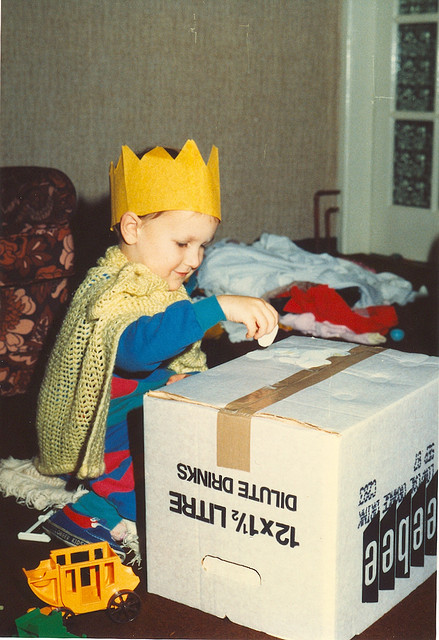
Here’s a piece from CBC about the shortlist. Here’s a nice article about the medal. And here’s a picture of me dressed as a king:

2166197384_9443266588_z

New Book: A Loose Egg

egg_cover_image

Here it is. I’ve got a new book out. It’s the long-anticipated (read inevitable) humour collection.

It’s a 150-page anthology of refined and beautified diary entries, magazine items, and completely new material. I think you’ll find it properly hilarious, madam.

The new book is called A Loose Egg and you can buy it from Amazon.ca or from Blurb (where it’s cheaper) or from me in person at this year’s Expozine.

From the back of the book:

Indolent dandy Robert Wringham (“superb”—The Telegraph) occupies a lazy, hazy, mazy world of geriatric flies, winking sparrows, and smiling labradoodles.

Witness!
– a ‘Hungry Hippos’ hustle
– an operatic battle of wits
– the airline steward with a hole in his head

Discover!
– how to jinx an important hockey game
– how to put the student loan company off your scent
– what not to do when you encounter a bear

Concede!
– that real men sit to pee
– that noone should ever go swimming
– that the flight paths of flies can be redirected with the power of the human mind

Wringham’s vignettes have appeared in the Idler and Playboy and in his own weekly blog. Now, at last, his best humour has been lovingly torn from its original context and respectfully bashed into book form.

Yes, it’s time for the inevitable Robert Wringham miscellany. His finest comic peluche.

The book also has three new illustrations by Samara and a top-notch cover by Neil.

Mr Peanut (MD)

A few weeks ago, in downtown Montreal, we noticed a large truck emblazoned with the festive colours and corporate iconography of Planters Nuts.

I wouldn’t like to describe it here as “a truckload of peanuts” because I have no idea. For all I know, there was just one single, highly pampered, peanut inside or maybe Planters were transporting office supplies to their workers in a truck that looked like it might contain peanuts. Perhaps the truck wasn’t anything to do with Planters at all and the friendly “Mr Peanut” logo was being used to disguise a far-darker cargo. Pringles perhaps. I don’t know. It’s something of a Schrödinger’s Peanut situation, and I think we’re getting off the point.

Look. The side of the truck displayed a picture of smiling Mr Peanut, who looks more and more like Clive Anderson with every redesign. And next to his beaming portrait were the words: MR. PEANUT (MD).

MD? I was at once delighted by the idea that Mr Peanut might be a Medical Doctor and angry at myself for not realising it before. Of course Mr Peanut was a medical doctor. It made complete and total sense.

Clearly, a successful medical practice is how he affords such fine accouterments: the top hat, the monocle, the ebony cane, the spats.

How else? You didn’t think he made his fortune as a peanut magnate did you? For crying out loud, he is a peanut. He’s hardly likely to sell his brothers and sisters to be rolled in salt and casually scoffed in pubs and airplanes. That would be downright sick.

Also, there are a lot of people out there who are deathly allergic to Mr Peanut and his kind. It must be very difficult for Mr Peanut to walk down the street or go to the cinema without making a lot of people nervous. At least this way, should his very presence accidentally trigger an anaphylactic shock in a passing stranger, he’s able to be useful and to make repairs.

“Is there a doctor in the house!?”

“Yes!”

In such a situation, Mr. Peanut is at once curse and cure. That’s what he keeps beneath the top hat: an EpiPen. He never leaves home without one.

My wife pointed out that the “MD” after his name was the French equivalent of “TM” in English. The MD was simply pointing out that Mr. Peanut is a registered trademark.

Oh!

Of course he wasn’t a medical doctor. He’s known far and wide as Mr. Peanut, not Dr. Peanut. Someone who wears a top hat and a monocle would never choose the more humble of those honorifics. Frankly, I’m surprised he’s not going around calling himself Dr. Prof. Rev. Peanut (MD) even without the medical degree.

I had been a fool. And my wife was laughing at me.

The strangest thing about all this is that, weeks later, part of me still thinks that Mr. Peanut is a medical doctor.

I saw some Planters Nuts in the supermarket today and something in me said “Mr. Peanut can write prescriptions.”

Even though it never made sense to begin with, and even after Samara filled me in on what the MD really signified, I’m still slave to my first, wholly mistaken, impression.

When I’m old and senile, I will almost certainly tell the nurses that Mr. Peanut is one of the finest doctors in the land and that might want to consult him about my quinapril doses.

This really could end badly. I myself have a peanut allergy. If I should ever have the misfortune to sit next to Mr. Peanut in the cinema, I’ll incorrectly assume he’ll be the one to help reduce the swelling.

Worst of all, nobody will shout “Is there a doctor in the house?!” because nobody else on the planet sees Mr. Peanut and thinks “Medical Doctor”.

And in the cinema specifically, they’re far more likely to be shouting “Down in Front!” because of his fucking top hat.

From now on, to be safe, I will only go to IMAX cinemas. They don’t tend to screen the kind of medical dramas that would attract Mr. Peanut and the 3D doesn’t work if you have a monocle.

A Sketch of Montreal

Montreal! Where albino squirrels run amok, Mr Peanut is an MD, the hockey team can be controlled with the mind; and (soon) my blimp will patrol the skies.

Down in the parks: topless men, bottomless drinks, bits of stadium, visible panty lines.

Out on the streets: beret-wearing women riding side-saddle with cigarettes, peg-legged pirates, cross-eyed babies, puking Torontonians unaccustomed to the fun.

At any one time, half of Montreal’s population is underground. I refer not to “the underground city” that the tourists are always looking for (any day now, they’ll find it), but to the perpetual state of digging the streets up. Either there’s a year-round treasure hunt that nobody’s told me about or the mayor has lost his keys.

The women and men of Montreal could all work as models if they wanted to. The women could model high fashion, the men could model anything from gravel to grit.

I don’t mean to patronize Montreal’s women by suggesting they’re all beautiful or to insult Montreal’s men by suggesting they’re all hideous (so very hideous), but nowhere else in the world have I so frequently been moved to say the words “I’m sorry Madam, but is this man upsetting you?” only to discover he’s the husband of twenty years.

Montrealers are generally prepared to get from A to B by any means necessary. Boulevard Saint-Laurent looks like the Wacky Races. In a single day last week I saw a home-made motor-trike; an ersatz batmobile; some sk8er bois old enough to know better; a procession of Hell’s Angels, the leader of which wore bunny ears; a hipster with Icarus wings; Leonard Cohen and PK Suban on a tandem Bixi; and a dwarf on a pogo stick.

At first I assumed they were after me, but it may have been chucking out time at Cirque du Soleil Anonymous.

Jerusalem was built on seven hills, as were Rome, Paris, Budapest, Byzantium and Edinburgh. Efficient Montreal did it in one. But it’s not a hill, dammit, it’s a mountain.

There are no truly high-rise buildings due to a bylaw about structures not exceeding the height of Mount Royal itself. Presumably the City Council are afraid of angering the Volcano Gods.

Further credence is lent to Volcano Gods theory when you consider “The Tams”. It’s supposed to take place on Sunday, but there’s always at least one drummer sitting in the shade of that statue thrubbing along on his own. Why? Because if the drumming were to stop, the Volcano God would awake. Those crusties are in the pay of the City Council and we should all be glad of it.

That Earthquake last year? A warning shot. The on-duty drummer must have been distracted by one of those model women or a pogo dwarf.

There’s a giant orange on the side of the Décarie Expressway. I’ve been there. There’s a hotdog stand in the bottom. I asked a lady working there what they keep in the rest of the orange. She said “Nothing”. Suss.

Montreal, as David Cronenberg knows, is the ideal place to hide from the supernatural. That towering cross on Mount Royal (though its main function is a massive key to wind up the town each morning) sends out a clear message to vampires: “you may be welcome in the rest of Canada, but Montreal’s not having it. We’ve got quite enough pale young men with top hats and pierced nipples, merci.”

Zombies meanwhile will never breach our city, thanks to a convenient flap on the Jacques Cartier bridge. At least I assume that’s what all the seemingly-functionless light switches in Plateau apartments are connected to. One flick of the wrist and Johnny Deadfellow is in the Saint Lawrence. We’ll lose the odd Boston rideshare that way, but it’s something to chat about in the lavatory at Expozine.

Speaking of Cartier, he and his posse must have must have arrived here in the summer. “Zut Alores!” they must have said, “Is zis not a paradise, yesno? We will settle down ‘ow-you-say tout-sweet.” And by the time winter came along, they’d already built a whole city and it was too late to move a few degrees south.

Silverfish Pedicures

Dogs, cats, gerbils: all socially-acceptable fauna to share a home with.

There aren’t many people who have pet silverfish.

In fact, the only reason I’m able to pick out a silverfish in a lineup is that we used to get them in our outbuildings when I was little and Dad always insisted they be given the back of the shoe. Yes, snuffed out with the traditional method reserved for minibeasts: squishing.

Being a ridiculous greenie today and having far too much empathy for my own good, I’m reluctant to do anything about the silverfish currently occupying our bathroom.

It’s not like they’re using up all the hot water or leaving hairs on the soap.

Indeed, they don’t seem to be doing any harm at all. Silverfish, as I understand it, consume paper and while this would be an obvious threat to precious things like books or papier-mâché hats, the ones in our bathroom seem to be subsisting on the tissue-paper dust that snows down onto their home in the ventilator when somebody tears off a piece of toilet roll.

It’s a rather charming little ecosystem.

Not ones for venturing out during daylight hours (something I can very much relate to), the silverfish and I only cross paths in the event of a midnight pee.

Even then, they largely ignore the gigantic vertebrate in their midst (that’s me) and swim quite playfully around my bare feet (moving in a way evocative glistening little fish, hence their name).

If there are high-flying ladies out there paying good money for goldfish pedicures, I don’t see why I should be turning down silverfish pedicures for free.

Silverfish pedicures: the poor man’s indulgence.

Silver is only second prize, after all. I’m willing to accept that.

To tell you the truth, dear reader (and why wouldn’t I? I’ve already confessed to my shameful bathroom infestation), the silverfish are actually rather cute. The baby ones are the size of eraser rubbings. How can such a tiny form contain anything like a mind? It seems impossible, but there they are.

Yes, reader, there are baby ones. There were originally only two silverfish. We called them Silvia and Silvio on the rather heteronormative presumption that they were a male-female couple. Hasty, yes, but soon proven accurate, as their numbers began to increase.

You may be thinking: Kill them! Kill them now before it’s too late! and I agree it may be possible that the infestation is getting out of hand. But there’s the Montreal Agreement to consider.

You see, the silverfish and I have an unspoken agreement. If they stay in the bathroom, they can continue to live and to thrive.

After all, who am I so snuff our their tiny lives for no good reason? I’m no beastly Titan, you know.

But if I see one elsewhere in the apartment, I’ve given myself license to thwack it. Until that day, I’d allow them to live in peace rather than, as the case would be, pieces.

That day arrived today. I found a silverfish in the bedroom.

When I squashed the rogue animal with the spine of How to Be Idle (sorry Tom, it just happened to be to hand — it’s a testament to the book that it’s always so close by) it reduced to a barely-identifiable smudge, like a smattering of ash.

Needless to say, I felt terrible about this. A life smudged out. But them’s the rules, silverfish. You saw the agreement on the table. I must protect my books and any house guests who happen to wear papier-mâché hats.

I’m now thrown into a moral quandary. Do I make a preemptive strike by exterminating all of the silverfish–innocent babies and all–as they sleep? Or do you think they’ll get the message when none of their scouts ever seem to return from beyond the bathroom door?

Strike in advance to protect my books? Or punish only the offending parties? I don’t think it’s hyperbole to suggest that this must be exactly how President Obama feels about ISIS.

My Blimp

While I was idling in the hammock today, an airship passed overhead. Next door’s pug and I were equally delighted.

It was a lovely thing to see on a quiet autumn day, drifting proudly across a backdrop of cirrus clouds.

Oddly enough, we recently enjoyed a curious BBC documentary programme called Cloud Lab about a team of scientists flying around in a custom-made airship discovering things about clouds.

Not for the first time this week then, I was struck by how grand it would be to actually have an airship to ride around in.

What does it cost to have an airship, I wondered. Far too much, surely. About a hundred thousand dollars perhaps, or even more.

And then it struck me. That actually wasn’t very much. It’s more money than I have, obviously, because I’m an indolent wastrel, but it’s the kind of money that fairly ordinary people spend on things like houses and cars and all the rest of junk they think they need.

An airship was no more ridiculous that those things, dammit! I could have an airship if I wanted one.

My mind began to race. I loved the idea of an airship, perhaps permanently moored above the city, like how the HMS Belfast is moored in London.

I wouldn’t need an address any more. When people asked where I live or work, I could just proudly say “oh, I live in the blimp” and gesture up into the sky.

“You live in the blimp?!” they’d say.

And I’d say “Yes. Yes. I live in the blimp.”

The HMS Belfast is a tourist attraction in London, as is the permanently moored Tall Ship in Glasgow. I can only assume that the City of Montreal would be delighted by my plan. The blimp would attract people from far and wide–Ottawa even–and if they paid enough money I could take them for rides, maybe even drop them off at home.

I’d fulfill my ambition of being able to take a rope ladder to work. I’d be the only person higher than the crane operators. Their necks would creak as vertebrae groaned with the unfamiliar sensation of looking upwards. “Sweet Jesus,” they’ll say, “Someone found a way.”

It wouldn’t be very nice for the people who lived in the shadow of the blimp, I suppose. They’d never get any sunlight. The value of their property, now permanently eclipsed into a state of permanent night by my blimp, would plummet. The plants in their window boxes would shrivel and they’d all complain of a D-Vitamin deficiency. To them, I say: sorry.

This is the kind of revelry that comes to mind in a hammock, of course. There’s no practical application to any of this, of course. And even if there was, it would be highly unethical to plunge so many people into a state of permanent twilight. Of course.

But. Ah, but.

I got onto Google and searched “how much does it cost to buy a blimp?”

According to the first result on WikiAnswers, “A lot of money, but don’t worry. Keep smoking your crack pipe and I’m sure you’ll find one.”

Another answer: “It costs a quarter of a million dollars to rent the Budweiser Blimp for two hours.”

Yet another: “The Goodyear Blimp cost them three million dollars. And you’d need a special hangar to keep it in, which would also cost millions.”

Hangar. Pfft. Hadn’t they thought of a permanent mooring? Leaving it floating in the sky eternally would be free, the idiots. No one has thought this through except me.

And my blimp wouldn’t need to be as ostentatious as the Goodyear or Budweiser blimps. Mine wouldn’t be decked out in flashing lights to amuse the painted yobbos at Molson Stadium. The very thought.

I bet I could find someone willing to sell me a more humble blimp, perhaps one that I could deck out in the New Escapologist masthead colours or even a likeness of my own face like some kind of Batman villain might do.

And that’s when I found www.personalblimp.com

It costs “between $100,000 and $200,000”. That’s perfectly affordable and I’m sure my bank manager (who has been trying to get me into a mortgage for years) will be delighted to stump up the cash.

The personal blimp website also says something about FAA certification and needing permission to fly an airship around above a city, but I’m sure that’s all just legalese and nothing to worry about. I think I can confidently say that I’ll be flying (driving? piloting? plenty of time to learn the specifics) my own blimp pretty soon.

Look up, Montreal, and maybe you’ll see my new home office.

Our Saturday Mornings

I awoke prematurely this morning from a nightmare inspired by the hit anime series Attack on Titan.

It was 10am. Early enough for me, but Samara had been long awake and was sitting right next to me, showered and coffeed, reading a book and generally firing on all cylinders.

Anyway. Attack on Titan is about hostile, skinless, eerily-grimacing giants who routinely break through the defenses of a walled city to eat the humans within.

It’s terrifying. It’s also horribly nihilistic since the Titans don’t actually need to eat. They don’t digest anything. They just chomp the humans up and swallow them down for no clear reason whatsoever. Well that’s just plain naughty.

“If I were a Titan,” I said sleepily to Samara, “I wouldn’t eat you.”

It was just my dreamy, morning way of saying “I love you”.

“That’s kind of you,” she said.

“I’d keep you safe from the other Titans,” I said, “in a little house inside my big Titan house and I’d just look in at you through the windows.”

“Would you be all skinless and grimacing?”

“Yes,” I said.

“I’m not at all certain that I’d enjoy that.”

“But I wouldn’t be able to help the skinlessness and the grimacing,” I said, “That’s just how I’d look.”

“Well, I suppose that’s okay then,” she said.

She saw me laughing and she knew what would be coming next. I always say the same thing when we’re talking about giants looking through windows, a surprisingly common occurrence.

“Would you be wanking?” she said in that tone of voice suggesting she’s heard all of this before.

“Yes,” I said.

“I thought so,” she said, “And crying at the same time, I suppose?”

“Yes,” I said.

There is nothing funny about mentally-ill giants, looking in windows and wanking and crying at the same time.

She was reading An Edible History of Humanity by Tom Standage, which I thought was a bit of a creepy coincidence.

“I’d make sure you were comfortable,” I said, “and that you’d be spared from the Titan rampage.”

Sensing that this somehow wasn’t enough of a proposal, I added, “and I’d make you a sandwich every day.”

“A nice tofu sandwich?”

“Yes. But it’d be difficult to make it with my massive Titan hands, so I’d have to keep a puny human chef around on retainer.”

“He’d live with me?”

“No,” I said, “he’d have his own tiny house.”

I thought about this a little more.

“And,” I said, “I’d have to keep some farmers around to grow the beans required to make the tofu.”

The ramifications of this sandwich promise began to dawn on me. I’d need to spare some human farmers to grow the wheat to make the bread for the sandwich. I’d need bakers to bake it, other farmers to grow any seeds to add to the bread, and further farmers to grow any salads or other vegetables my tiny human wife might want in her daily sandwich.

“Oh, the whole thing’s too complicated,” I said.

Before I knew it, I’d end up with a whole human village in my Titan house. Where I come from, that’s called an infestation.

“Why can’t you just eat Titan food like I do?”

“Titans don’t eat, remember.”

“Oh yeah.”

I didn’t have a solution to any of this. Before I knew it, the entire human race would be safe and uneaten in my house. That wouldn’t be any good at all. I’d be the laughing stock of the Titans.

“I wouldn’t eat you,” I said again, perhaps a little too defensively.

“Okay,” she said, “Thank you.”

“I probably would eat you, actually.”

“But you just said that you wouldn’t eat me.”

“Yes,” I said, “I feel that way now, but I’d be a Titan. It would be in my nature to eat you.”

“Well, that doesn’t sound very fair to me,” she said.

“You’re just saying that because you’re a puny human. If you were a Titan, you’d understand. I’d just have to eat you up. I’d pop your head right off. Om. Nom. Nom.”

I mimed what this would look like, in case it wasn’t clear.

I patted my stomach and pretended to burp.

“Quite tasty,” I said, “Not delicious. But quite tasty.”

I got up and stretched and went off to cook our breakfast of non-human vegetable matter.